India's exporters, manufacturers, and MSMEs are playing an increasingly important role in global trade, and managing input costs efficiently has become central to staying competitive. The Advance Authorization Scheme is one of the key export promotion tools available to eligible businesses, allowing duty-free import of inputs that go into manufacturing goods meant for export. For businesses that qualify, this can meaningfully support production planning and cost management.
However, simply holding an authorization is not enough. Understanding eligibility conditions, calculating input requirements accurately, meeting export obligations on time, and maintaining proper documentation all determine how much value a business actually gets from the scheme. This article walks through practical, strategy-focused ways that exporters can use the Advance Authorization Scheme more effectively, while remaining compliant with DGFT and customs requirements. Professional guidance can further help reduce errors and streamline the process, especially for businesses new to export documentation.
What Is the Advance Authorization Scheme and How Does It Work?
The Advance Authorization Scheme is a duty exemption scheme issued under India's Foreign Trade Policy and administered by the Directorate General of Foreign Trade (DGFT). It allows eligible exporters to import specified inputs without paying basic customs duty, provided those inputs are physically incorporated into products that are subsequently exported.
The scheme is built around a simple relationship: imported inputs go into manufacturing, and manufactured goods go out as exports. This relationship is captured through an export obligation — a commitment to export a defined quantity or value of finished goods within a set period, generally calculated using applicable input-output norms.
In practice, a manufacturer or exporter applies to DGFT for an authorization specifying the inputs, the finished product, and the applicable norms. Once issued, eligible inputs can be imported duty-free, used in production, and the resulting goods exported to fulfill the obligation. Both manufacturer exporters and, in applicable cases, merchant exporters working with a supporting manufacturer can use this route, subject to current DGFT conditions.
What Are the Key Benefits of the Advance Authorization Scheme?
When used correctly, the scheme can offer several practical advantages to eligible businesses engaged in import export activity:
- Duty-free import of eligible inputs used in export production
- Potential reduction in overall import-related costs
- Lower production costs for export-oriented manufacturing
- Improved export competitiveness in international markets
- Better working-capital management by avoiding upfront duty outlay
- Meaningful support for manufacturing exporters handling large input volumes
- Possible improvement in profit margins, where costs are well managed
- Easier access to imported raw materials not readily available domestically
- Support for scaling export operations over time
- Better cost planning for confirmed export orders
Actual outcomes vary by business, product category, and how efficiently the scheme is managed — none of these benefits should be treated as guaranteed.
Who Can Benefit from the Advance Authorization Scheme?
The scheme is generally relevant to businesses that rely on imported inputs to manufacture goods for export, including:
- Manufacturer exporters producing goods directly for export
- Merchant exporters working with a supporting manufacturer, where applicable
- MSMEs involved in export-oriented production
- Businesses using imported raw materials, components, or consumables in export manufacturing
- Industries that depend significantly on imported inputs
- Businesses producing goods primarily for international markets
Eligibility conditions, product coverage, and input norms are set by DGFT and can change. Businesses should always check the latest eligibility requirements on the official DGFT portal or with a qualified trade advisor before applying.
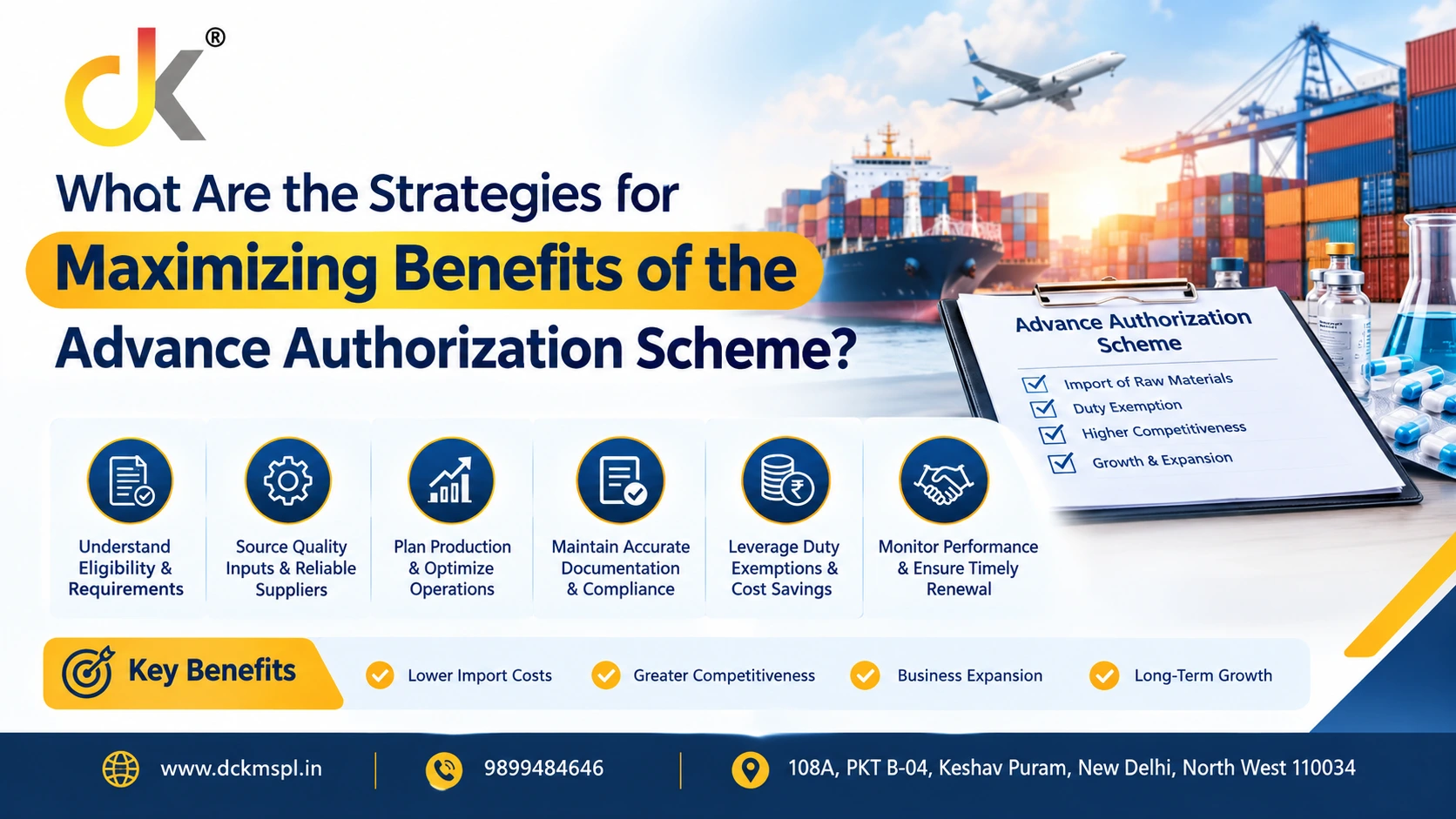
What Are the Strategies for Maximizing Benefits of the Advance Authorization Scheme?
Getting real value from an authorization depends on how well it is planned and managed. The following strategies can help businesses improve cost efficiency and reduce compliance risk.
- Accurately Calculate Input Requirements. Base import quantities on verified consumption data and applicable input-output norms, rather than estimates, to avoid over-importing or falling short of what production actually needs.
- Plan Imports According to Export Orders. Align import timing and quantities with confirmed export orders so that inputs are used efficiently and export obligations remain realistic and achievable.
- Understand Applicable Input Norms. Review the specific norms that apply to your product category, since these determine permissible import quantities and directly affect how the authorization can be used.
- Choose Inputs Carefully. Select only the inputs genuinely required for the export product, and compare quality, cost, and lead time between suppliers before committing to an import.
- Maintain Accurate Documentation. Keep invoices, shipping bills, bills of entry, and consumption records organized and consistent, since documentation gaps are a common source of compliance issues.
- Track Export Obligation Closely. Monitor obligation timelines and shipment progress regularly rather than only at renewal or audit time, to avoid last-minute compliance pressure.
- Avoid Unnecessary Imports. Import only what current and near-term production genuinely requires; excess stock ties up working capital and can complicate obligation calculations.
- Coordinate Procurement and Production. Ensure procurement, production, and export teams are working from the same schedule so imported inputs arrive when production actually needs them.
- Monitor Authorization Validity and Deadlines. Track the validity period of each authorization and plan imports and exports well within that window to avoid lapses.
- Maintain Proper Customs and Shipping Records. Retain organized copies of customs filings and shipping documentation, as these are typically required for obligation discharge and any future verification.
- Review Cost Savings Regularly. Periodically compare actual costs against what would have applied without the authorization, to understand whether usage is delivering genuine value.
- Stay Updated With DGFT Rules and Notifications. Foreign trade policy provisions and norms are revised periodically; regularly checking official DGFT updates helps avoid relying on outdated rules.
- Use Professional Compliance Support Where Required. For complex product categories, multiple authorizations, or first-time applications, professional guidance can help reduce documentation errors and compliance risk.
How Proper Planning Can Increase the Benefits of Advance Authorization
Planning is what turns an authorization from a paperwork exercise into a genuine cost-management tool. Businesses that plan well typically focus on:
- Forecasting production requirements based on realistic order pipelines
- Matching input quantities precisely with expected export production
- Planning procurement schedules around supplier lead times
- Avoiding excess inventory that ties up working capital
- Coordinating suppliers with confirmed export timelines
- Estimating landed costs, including freight, insurance, and handling
- Planning export shipments well in advance of obligation deadlines
- Maintaining sufficient working capital to manage timing gaps
- Reducing avoidable delays and last-minute expenses
Advance Authorization Scheme Documentation and Compliance
Documentation is central to using the scheme correctly. The checklist below outlines commonly required documents, though specific requirements can vary depending on the authorization and current DGFT or customs rules.
|
Document |
Purpose |
|
IEC (Importer Exporter Code) |
Mandatory identification for undertaking import/export transactions. |
|
PAN |
Required for business identity verification. |
|
Export-related documents |
Purchase orders, export contracts, or LC copies as applicable. |
|
Authorization documents |
The Advance Authorization license/certificate issued by DGFT. |
|
Commercial Invoice |
Details of goods, value, and buyer for each shipment. |
|
Packing List |
Item-wise packing details for customs verification. |
|
Shipping Bill |
Export declaration filed with customs. |
|
Bill of Entry |
Import declaration filed for inputs brought in duty-free. |
|
Input-output details |
Records showing how imported inputs were used in export production. |
|
Export obligation records |
Documentation tracking fulfillment of the export commitment. |
|
Supporting manufacturer documents |
Applicable when a merchant exporter works with a manufacturer. |
|
Product-specific documents |
Additional certificates or declarations, where required by the product category. |
Note: Documentation and compliance requirements can change based on DGFT notifications and customs procedures. Always confirm the current list applicable to your authorization with official sources.
Read More - How to Develop a Strategic Plan for EPR Registration in E-Waste?
Common Mistakes That Reduce the Benefits of Advance Authorization
- Incorrect input calculations leading to shortfalls or excess stock
- Importing more inputs than actual production requires
- Poor record keeping of consumption and shipment data
- Missing export-obligation deadlines
- Incorrect or incomplete documentation
- Ignoring applicable input-output norms
- Not tracking authorization validity periods
- Poor coordination between procurement and export teams
- Failure to verify current DGFT requirements before acting
- Delayed compliance reporting
- Not maintaining proper customs records
How to Improve Cost Savings Through Advance Authorization
Cost efficiency under the scheme comes from disciplined comparison and planning, not assumptions. Useful practices include:
- Comparing domestic and imported input costs before deciding on sourcing
- Calculating total landed costs, not just duty savings
- Optimizing procurement quantities against actual production needs
- Using accurate, verified consumption calculations
- Reducing unnecessary logistics and handling expenses
- Improving inventory planning to avoid tied-up capital
- Negotiating supplier terms for better pricing and lead times
- Coordinating imports closely with production schedules
- Monitoring actual versus estimated cost savings over time
- Treating the scheme as one part of a broader export-cost strategy, not a standalone solution
Cost outcomes depend on individual business circumstances, product categories, and market conditions. Businesses should avoid assuming guaranteed savings and instead evaluate results based on their own data.
Why Compliance Is Important for Maximizing Advance Authorization Benefits
- Following DGFT conditions attached to each authorization
- Fulfilling export obligations fully and within the specified timeframe
- Maintaining accurate and complete records throughout the authorization period
- Submitting required documents and reports on time
- Understanding the consequences of non-compliance, including potential penalties
- Monitoring policy updates that may affect ongoing or future authorizations
- Verifying the latest requirements directly through official DGFT and customs authorities
Tips for Successfully Using the Advance Authorization Scheme
- Understand the scheme thoroughly before applying
- Calculate input requirements carefully using verified data
- Keep documentation organized from the outset
- Track every import and export transaction against the authorization
- Maintain detailed production and consumption records
- Monitor export-obligation deadlines proactively
- Verify current DGFT guidelines before making decisions
- Coordinate customs, finance, procurement, and export teams closely
- Review authorization status regularly, not just at renewal time
- Seek professional guidance for complex or first-time cases
Why Choose [DCK] for Advance Authorization Support?
Navigating DGFT procedures, input norms, and export documentation can be time-consuming, particularly for MSMEs and first-time exporters. [DCK] works with import export businesses to make this process more manageable, offering:
- DGFT guidance tailored to your product category
- Advance Authorization consultation from application to closure
- Documentation assistance for IEC, shipping bills, bills of entry, and related paperwork
- Application support to reduce errors and processing delays
- Compliance guidance to help track export obligations and deadlines
- Export-import advisory covering broader international trade needs
- Process coordination between procurement, production, and export teams
- Professional, experienced support for complex or high-value authorizations
- Beginner-friendly assistance for businesses new to export documentation
- End-to-end trade documentation support across the export lifecycle
Conclusion
For eligible exporters, the Advance Authorization Scheme can be a genuinely useful tool for managing input costs and supporting export competitiveness. But its real value depends on how well it is planned and executed. Accurate input calculations, disciplined documentation, close tracking of export obligations, and efficient procurement and inventory planning all play a role in determining outcomes.
Staying updated with DGFT rules is equally important, since norms and conditions can change. Professional guidance can simplify this process considerably, particularly for MSMEs and businesses handling their first authorization. Before proceeding, businesses should evaluate the scheme carefully against their specific export requirements and verify current official rules through DGFT and customs authorities.
Frequently Asked Questions
What is the Advance Authorization Scheme?
It is a duty exemption scheme administered by the DGFT that allows eligible exporters and manufacturers to import specified inputs without paying customs duty, provided the inputs are used to manufacture goods for export and the resulting export obligation is fulfilled.
Who is eligible for the Advance Authorization Scheme?
Manufacturer exporters and, in many cases, merchant exporters tied to a supporting manufacturer may apply, subject to the eligibility conditions in force. Businesses should verify current eligibility criteria with the DGFT before applying.
What are the main benefits of Advance Authorization?
Key benefits include duty-free import of eligible inputs, potential reduction in production costs, improved working-capital management, and stronger export competitiveness for eligible businesses.
How can exporters maximize the benefits of Advance Authorization?
By accurately calculating input requirements, planning imports around confirmed export orders, maintaining precise documentation, tracking export obligations, and staying updated on DGFT rules and norms.
Can Advance Authorization reduce import costs?
It can help reduce import-related duty costs for eligible inputs used in export production, though actual savings depend on individual circumstances, input norms, and compliance. Businesses should not assume guaranteed savings without verifying their specific case.
What is export obligation under Advance Authorization?
Export obligation is the commitment to export a specified quantity or value of finished goods, manufactured using the duty-free imported inputs, within a defined timeframe set by the authorization.
What documents are required for Advance Authorization?
Commonly required documents include IEC, PAN, the authorization itself, commercial invoices, packing lists, shipping bills, bills of entry, and records of input consumption and export obligation. Requirements can vary by case.
How can businesses calculate input requirements correctly?
By referring to applicable input-output norms, analyzing actual production consumption patterns, and cross-checking historical usage data before applying for or importing against an authorization.
What are common mistakes under the Advance Authorization Scheme?
Frequent errors include over-importing inputs, inaccurate consumption calculations, poor documentation, missed export-obligation deadlines, and failure to track authorization validity.
How does Advance Authorization help manufacturers?
It allows manufacturers to access essential imported inputs without upfront duty costs, which can support more competitive pricing and better production planning for export orders.
How can I ensure compliance with Advance Authorization requirements?
By maintaining accurate records, meeting documentation deadlines, tracking export obligations closely, and regularly checking official DGFT notifications for policy updates.
Why should businesses take professional guidance for Advance Authorization?
Professional guidance can help reduce documentation errors, clarify eligibility and norms, and ensure timely compliance — particularly useful for new exporters or complex cases.
Get Expert Help With Your Advance Authorization Application
Whether you are applying for your first Advance Authorization or looking to streamline an existing process, getting the details right matters. Contact [DCK] today for professional Advance Authorization and export-import guidance tailored to your business.