
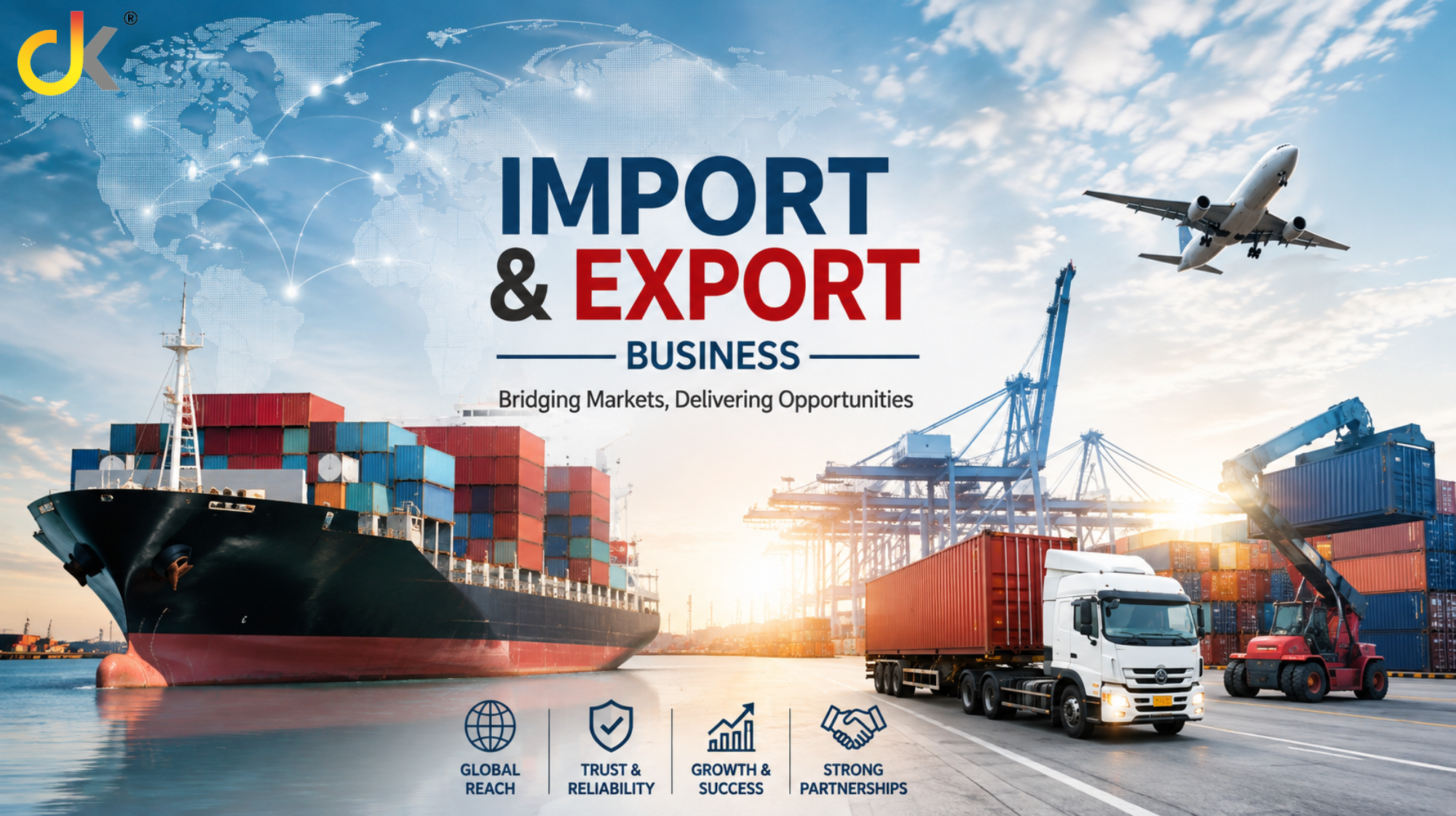
International trade has opened doors that never existed for small businesses a decade ago. Today, a manufacturer in a small town can sell products to a buyer thousands of kilometers away, all through a well-planned import export business. An import export business simply means buying goods from one country and selling them in another, or sending Indian-made products to international buyers.
India's growing reputation for quality handicrafts, textiles, spices, and engineering goods has created strong demand in global markets, making this an attractive opportunity for new entrepreneurs, manufacturers, traders, and even home-based business owners. With relatively low starting investment options and access to online B2B marketplaces, almost anyone with the right guidance can enter this field.
However, success in international trade depends on understanding registration, documentation, licensing, shipping, and international payment processes. This guide walks you through everything you need to know to start an import export business in India, the common mistakes to avoid, and how the right support can help you build a profitable, long-term global trade business.
Import Export Business – What Is It and How Does It Work?
An import export business involves two sides of international trade. Importing means bringing goods from a foreign country into your own country to sell locally. Exporting means selling domestically produced or sourced goods to buyers in other countries.
International trading works through a chain of participants: manufacturers or suppliers produce the goods, exporters or trading companies purchase and prepare them for shipment, and importers or distributors abroad receive and sell them in their local markets. Freight forwarders, customs agents, and banks support the movement of goods and money along the way.
The basic business model is straightforward — source products at a competitive price, add a reasonable margin, and sell to buyers who value quality, reliability, and timely delivery. Profits come from the price difference between sourcing cost and the final sale price, minus shipping, duties, and other expenses.
Why Start an Import Export Business in India?
India offers several natural advantages for anyone considering international trade:
Growing international demand for Indian handicrafts, textiles, spices, and organic products
Direct access to global markets through digital B2B platforms
Strong opportunities for MSMEs and small businesses to scale internationally
Room for steady business expansion as buyer relationships grow
Online B2B marketplaces that connect Indian sellers with international buyers
A large and active pool of international buyers sourcing from India
Government schemes and export promotion support for eligible exporters
The opportunity to earn in foreign currency, which can improve margins
How to Start an Import Export Business Step-by-Step
Starting an import export business becomes far easier when you follow a structured process:
Select a business or product category based on your interest and market demand
Research the target market, including buyer preferences and competition
Create a clear business plan covering costs, pricing, and target countries
Register your business under a suitable legal structure
Apply for required licenses relevant to your product category
Obtain IEC (Import Export Code) registration
Find reliable suppliers or manufacturers for your product
Find international buyers through B2B platforms and trade networks
Understand pricing, costing, and profit margins clearly
Arrange shipping and logistics with a trusted freight partner
Complete customs documentation accurately for smooth clearance
Receive international payments through secure banking channels
Build long-term relationships with buyers for repeat business
Import Export Business Registration and License
Before you start trading internationally, a few registrations and approvals are generally required:
Business registration under a proprietorship, partnership, LLP, or private limited structure
Import Export Code (IEC) issued by the Directorate General of Foreign Trade (DGFT)
PAN card and other business identity documents
GST registration, where applicable to your business type
A current bank account in the business's name
Product-specific licenses or certifications, if your product category requires them
Regulations and documentation requirements can be updated by authorities from time to time, so it is important to verify the latest requirements through official government sources such as the DGFT or your local trade authority before proceeding.
Documents Required for Import Export Business
Keeping your documentation organized from day one saves considerable time later. Here is a general checklist:
PAN Card
Aadhaar or other identity proof
Address proof
Business registration documents
Bank account details
Cancelled cheque
Digital signature, where applicable
GST documents, where applicable
Import Export Code (IEC)
Commercial invoice
Packing list
Shipping documents (bill of lading / airway bill)
Product-specific certificates, where required
Best Import Export Business Ideas in India
Some of the most sought-after Indian product categories in export markets include:
- Handicrafts
- Textiles and garments
- Home décor products
- Spices and food products
- Leather products
- Jewellery and accessories
- Organic products
- Agricultural products
- Engineering goods
- Beauty and personal care products
- Traditional Indian products
- Eco-friendly products
Rather than choosing a product because it seems popular, evaluate it against market demand, regulatory requirements, competition levels, your ability to source consistently, and realistic profit margins.
How to Find International Buyers for Your Export Business
Finding the right buyers is often the biggest challenge for new exporters. These channels tend to work well:
- B2B marketplaces such as global trade portals
- International trade exhibitions and fairs
- Business and export directories
- Export promotion councils and trade networks
- Social media marketing aimed at international audiences
- A professional website optimized for search (SEO)
- Targeted email marketing campaigns
- Direct outreach to potential buyers
- International distributors and sourcing agents
- Building trust through product samples and complete, accurate documentation
How Much Investment Is Required for an Import Export Business?
Investment needs vary widely depending on your product, scale, and business model. Broadly, budget for these categories:
|
Cost Category |
What It Covers |
|
Registration & Licensing |
Business registration, IEC, GST, and product-specific approvals |
|
Product Sourcing |
Purchasing raw materials or finished goods from suppliers |
|
Packaging |
Export-quality packaging suited to shipping and destination norms |
|
Shipping & Logistics |
Freight, customs clearance, and last-mile delivery costs |
|
Marketing |
Website, SEO, B2B listings, and buyer outreach |
|
Working Capital |
Day-to-day cash flow until payments are received |
A small trading model — sourcing limited quantities and shipping directly to a few buyers — can start with a modest budget. A large-scale export operation, with bulk sourcing, warehousing, and multiple international shipments, naturally requires significantly higher capital. Start according to what you can realistically afford, and scale as your buyer base grows.
How to Earn Big from an Import Export Business
Consistent, long-term growth in international trade usually comes from a combination of smart choices rather than one shortcut:
- Choosing high-demand, well-researched products
- Identifying profitable international markets
- Maintaining healthy, sustainable profit margins
- Building repeat customers instead of one-time buyers
- Reducing logistics costs through better freight planning
- Negotiating better prices with suppliers over time
- Expanding into related product categories
- Building a recognizable, trustworthy brand
- Selling through multiple international channels
- Developing long-term B2B relationships built on reliability
Results vary based on product, market conditions, and execution, so treat any income figures you see online with caution unless backed by verifiable evidence.
Read More - RoDTEP Scheme
Benefits of Starting an Import Export Business
- Access to a global customer base
- Opportunities for steady business expansion
- Potential for higher revenue than purely domestic trade
- Scope to build an internationally recognized brand
- Flexibility to work across multiple product categories
- Scalability as your buyer network grows
- Strong B2B growth opportunities
- Direct exposure to foreign market trends
- Solid long-term business potential
Common Mistakes to Avoid in Import Export Business
- Starting without proper market research
- Choosing the wrong product for your target market
- Ignoring import or export regulations
- Submitting incorrect or incomplete documentation
- Working with unverified buyers or suppliers
- Poor quality control before shipment
- Miscalculating shipping and logistics costs
- Ignoring currency fluctuation and payment risks
- Setting incorrect or unsustainable pricing
- Depending on a single buyer or a single market
- Not fully understanding customs procedures
Tips to Successfully Start an Import Export Business
- Research your market carefully before committing
- Start with one focused product category
- Understand your target country's import regulations
- Verify buyers and suppliers before finalizing deals
- Keep all documentation organized and up to date
- Calculate complete landed or export costs in advance
- Maintain consistent product quality
- Invest in professional, compliant packaging
- Build a strong online presence
- Follow official trade policy updates regularly
- Start small and scale gradually as you gain experience
Why Choose [https://dckmspl.in//DCK] for Import Export Business?
Starting an import export business involves many moving parts, and having the right guidance can save time, money, and costly mistakes. [Your Website/Company Name] supports aspiring exporters and importers with:
- Step-by-step business guidance
- Import-export consultation tailored to your product
- Documentation assistance for registration and shipments
- Market research support to identify the right buyers
- Guidance on evaluating buyers and suppliers
- Assistance with business and IEC registration
- A transparent, honest process at every stage
- Professional, experienced support
- Beginner-friendly assistance for first-time exporters
- End-to-end guidance from planning to your first shipment
Conclusion
The import export business remains one of the most promising opportunities for entrepreneurs looking to expand beyond domestic markets. With growing global demand for Indian products, digital access to international buyers, and support structures for small businesses, international trade is more accessible today than ever before.
Success, however, depends on choosing the right product and market, completing registration and documentation correctly, and planning shipping and payments carefully. Starting with a clear business strategy — and professional guidance where needed — can help beginners avoid common pitfalls and build a sustainable trading business.
If you're ready to explore international trade, take the time to research your market and take your first step with confidence.
Frequently Asked Questions
1. What is an Import Export Business?
An import export business involves buying goods from one country and selling them in another — importing brings foreign goods into your country, while exporting sends domestic goods abroad.
2. How can I start an Import Export Business in India?
You can start by selecting a product category, researching your target market, registering your business, obtaining an IEC, and finding reliable suppliers and international buyers.
3. Is an Import Export Business profitable?
It can be profitable when the right product, market, and pricing strategy are chosen, though profitability depends on execution, competition, and market conditions.
4. What documents are required for an Import Export Business?
Common documents include PAN card, identity and address proof, business registration papers, bank details, IEC, commercial invoice, packing list, and shipping documents.
5. What is an Import Export Code (IEC)?
The IEC is a unique registration number issued by the DGFT that is mandatory for any business involved in importing or exporting goods from India.
6. How much investment is required to start an Import Export Business?
Investment varies based on product type and scale, covering registration, sourcing, packaging, shipping, and marketing costs. Small trading models can start with a modest budget.
7. Which products are best for export from India?
Popular categories include handicrafts, textiles, spices, leather goods, jewellery, organic products, agricultural goods, and engineering products, depending on market demand.
8. How can I find international buyers?
International buyers can be found through B2B marketplaces, trade exhibitions, export directories, social media, a professional website, and direct outreach.
9. Can beginners start an Import Export Business?
Yes, beginners can start with proper research, correct registration, and step-by-step planning, ideally with guidance to avoid common early mistakes.
10. How can I earn big from an Import Export Business?
Consistent growth comes from choosing high-demand products, maintaining margins, reducing logistics costs, and building long-term buyer relationships rather than relying on any single shortcut.
11. Is an Import Export Business possible online?
Yes, much of the buyer discovery, marketing, and communication in modern international trade happens through online B2B platforms, websites, and digital marketing.
12. Why should I take professional guidance for starting an Import Export Business?
Professional guidance helps beginners navigate registration, documentation, and compliance correctly, reducing the risk of costly errors and delays.
Disclaimer: Regulations, licensing requirements, and documentation for import-export businesses can change. Please verify the latest requirements with the DGFT, GST authorities, or other relevant official bodies before proceeding.
Ready to start your international trade journey? Contact [DCK] today for expert import-export business guidance, documentation support, and end-to-end assistance.