Introduction
International trade is becoming an important growth driver for manufacturers, MSMEs, and export-oriented businesses across India. As competition increases, having access to modern machinery is often essential to produce goods that meet global quality standards. This is where the EPCG Scheme becomes relevant for many exporters.
In simple terms, the EPCG Scheme, or Export Promotion Capital Goods Scheme, is a government framework that allows eligible businesses to access capital goods for export-oriented production under applicable provisions. For MSMEs, manufacturers, and established exporters alike, understanding EPCG eligibility, authorization, and export obligation can open up meaningful opportunities for expansion.
However, benefiting from the EPCG Scheme requires more than just applying. Businesses need to understand the rules, plan their compliance carefully, and stay updated with the latest DGFT guidelines. This article walks through what the EPCG Scheme is, its benefits, eligibility, application process, documentation, and practical tips to use it effectively, along with the role professional guidance can play in avoiding common mistakes.
EPCG Scheme – What Is It and How Does It Work?
Featured Snippet: The EPCG Scheme (Export Promotion Capital Goods Scheme) is a Government of India export promotion scheme, administered by the DGFT, that allows eligible exporters to access capital goods for pre-production, production, and post-production purposes, subject to fulfilling a defined export obligation under applicable rules.
The scheme is built around a simple idea: export businesses often need machinery and equipment to manufacture goods efficiently, and the EPCG framework is designed to support that need under specific conditions set by the Directorate General of Foreign Trade (DGFT).
'Capital goods' generally refers to machinery, equipment, and related components used in manufacturing or production processes. Under the EPCG framework, an eligible business applies for an EPCG authorization, identifies the capital goods required, and, once approved, can proceed as per the applicable procedure — while agreeing to meet a corresponding export obligation over a defined period.
For example, a garment manufacturer looking to upgrade stitching and finishing machinery may explore the EPCG route to support higher production volumes intended for export markets, provided the business meets current eligibility and obligation requirements. This is only an illustrative example, not a guarantee of eligibility or outcome.
Why Is the EPCG Scheme Important for Export Businesses?
Manufacturing capacity and machinery quality directly influence how competitive a business is in international markets. Outdated equipment can limit production volume, affect product consistency, and increase operational costs. This is one reason many export-oriented businesses evaluate schemes like EPCG.
- Supports technology and machinery modernization for export production
- Can help improve production capacity and manufacturing efficiency
- May support better product quality and consistency
- Can strengthen a business's competitiveness in the global market
- Offers a potential pathway for MSMEs and growing exporters to scale operations
- May help reduce certain upfront capital-cost pressures, subject to applicable rules
Importantly, EPCG is one part of a broader export strategy — it works best when aligned with realistic production goals, market demand, and a clear plan to meet the associated export obligation.
EPCG Scheme Benefits for Exporters
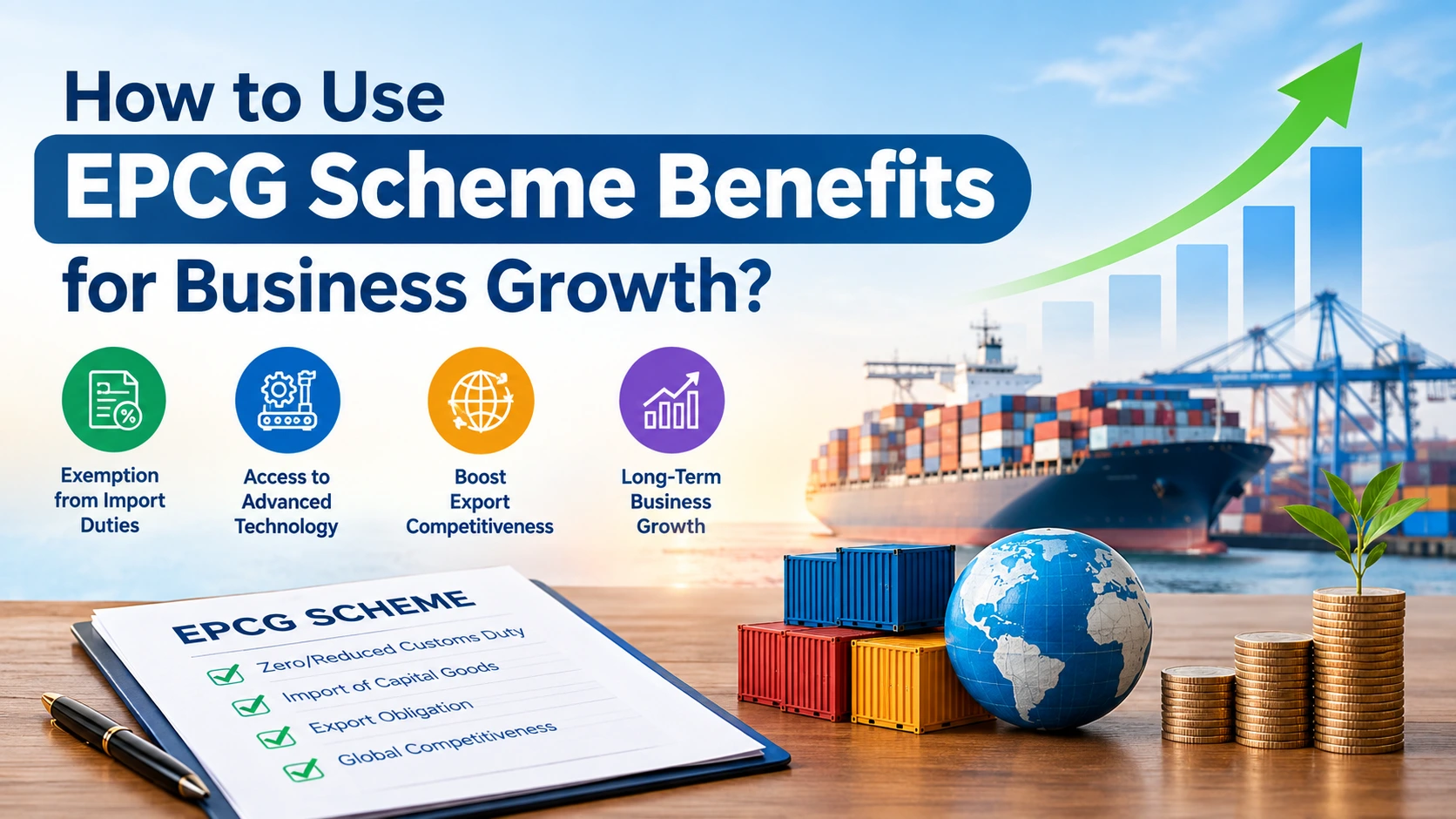
The core EPCG Scheme benefits revolve around capital goods access, production improvement, and long-term export competitiveness. Below is a simple overview of how these benefits can translate into practical outcomes for a business.
|
EPCG Benefit |
How It Can Help a Business |
|
Capital Goods Support |
Helps eligible businesses upgrade machinery used in export production |
|
Production Improvement |
Can improve manufacturing capacity over time |
|
Technology Modernization |
Supports adoption of more efficient equipment |
|
Export Competitiveness |
Can strengthen a business's position in international markets |
|
Business Expansion |
May support larger and more consistent export operations |
These benefits are subject to eligibility, applicable DGFT rules, and fulfillment of the export obligation attached to the authorization.
Who Can Apply for the EPCG Scheme?
Not every importer or exporter automatically qualifies for the EPCG Scheme. Eligibility generally depends on the nature of the business, its export activity, and the specific capital goods involved.
- Manufacturer exporters with a genuine export requirement
- Merchant exporters tied to supporting manufacturers, where applicable
- Manufacturing units seeking to expand export-oriented production
- Service providers, where relevant under current scheme rules
- Businesses that can demonstrate the intended use of capital goods for export activity
Because eligibility criteria, product coverage, and sector-specific conditions can change, businesses should always verify current requirements through official DGFT sources before applying.
EPCG Scheme Eligibility and Export Obligation
Export obligation is one of the most important concepts under the EPCG Scheme. In simple terms, it refers to the commitment a business makes to achieve a certain amount of exports within a defined period, in exchange for the benefits associated with the EPCG authorization.
Before applying, businesses should understand how their obligation will be calculated, the timeline involved, and the records they will need to maintain to demonstrate compliance. Because obligation calculations and timelines can change, always confirm the latest position through official DGFT provisions.
Illustrative example: a business that receives an EPCG authorization for certain machinery may be expected to achieve a specified level of exports over several years. If the obligation is not met as required, the business could face consequences under applicable rules — which is why careful planning and accurate export record-keeping matter from the outset. This example is for illustration only.
How to Apply for EPCG Scheme in India – Step-by-Step
- Assess Business and Machinery Requirements — Identify what capital goods your production process actually needs.
- Check EPCG Eligibility — Confirm your business type and export activity meet current scheme conditions.
- Identify Eligible Capital Goods — Shortlist machinery that qualifies under applicable EPCG provisions.
- Review Current DGFT Rules — Check the latest guidelines before proceeding further.
- Prepare Business and Export Documents — Gather the documentation required for the application.
- Obtain or Verify Required Digital Credentials — Ensure any required digital signatures or credentials are in place.
- Apply for EPCG Authorization — Submit the application through the applicable DGFT process.
- Complete Applicable Customs Procedures — Coordinate with customs for import-related formalities.
- Import or Procure the Approved Capital Goods — Proceed as per the terms of the authorization.
- Maintain Required Records — Keep documentation of machinery use and export activity.
- Fulfill the Applicable Export Obligation — Work toward the export targets within the defined period.
- Submit Required Documents and Compliance Evidence — Provide proof of export performance as required.
- Close or Complete EPCG Obligations as Applicable — Complete final compliance steps to close the authorization.
EPCG License / Authorization – What Businesses Need to Know
An EPCG authorization is different from general business registration. While registration establishes your business's legal existence, EPCG authorization is a specific approval granted under the export promotion framework administered by DGFT, allowing access to identified capital goods for export-related production.
Businesses should carefully verify whether their intended machinery falls under eligible capital goods classifications, ensure accurate technical descriptions are submitted, and avoid providing incomplete or inaccurate information — since this can affect both the approval process and future compliance.
Read More - Import Export Business: How to Start & Earn Big
Documents Required for EPCG Scheme
- PAN Card
- Business Registration Documents
- Import Export Code (IEC)
- GST-related documents, where applicable
- Bank details
- Digital Signature / Digital credentials, where applicable
- Export-related information
- Details of proposed capital goods
- Machinery or equipment specifications
- Purchase or proforma invoice, where required
- Technical documents, where applicable
- Export performance information, where applicable
- Supporting declarations and undertakings
- Other documents required by the applicable authority
Note: Exact documentation requirements may vary depending on the business, the transaction, the product involved, and current DGFT requirements. Always confirm the applicable checklist before submission.
Which Businesses Can Benefit Most from the EPCG Scheme?
A range of manufacturing and export-oriented sectors may find the EPCG Scheme relevant, depending on their capital goods needs and export activity:
- Manufacturing companies
- Engineering exporters
- Textile manufacturers
- Garment exporters
- Food processing businesses
- Pharmaceutical businesses, subject to applicable rules
- Auto-component manufacturers
- Electronics manufacturers
- Machinery manufacturers
- Handicraft exporters
- Chemical exporters, subject to applicable regulations
Actual suitability depends on current scheme rules, the nature of the business activity, capital-goods eligibility, and the export obligation involved.
How EPCG Scheme Can Support Business Growth
When used appropriately, the EPCG Scheme can play a role in a business's broader growth plan by supporting:
- Increasing production capacity and manufacturing efficiency
- Modernizing machinery and reducing production bottlenecks
- Supporting better and more consistent product quality
- Increasing export capability and entering new international markets
- Handling larger international orders and improving competitiveness
It's important to be realistic: the EPCG Scheme itself does not guarantee higher profits or business success. Outcomes ultimately depend on product demand, execution, target markets, pricing strategy, and ongoing compliance.
EPCG Scheme vs Other Export Promotion Schemes
India offers several export promotion mechanisms besides EPCG, each with a different purpose. Understanding these differences helps businesses choose the right combination of benefits.
|
Factor |
EPCG Scheme |
Other Export Benefits |
|
Main Purpose |
Capital goods / machinery support |
Depending on the scheme (e.g., duty remission, RoDTEP) |
|
Primary Focus |
Export-linked capital investment |
Duties, taxes, or other export support |
|
Export Obligation |
Applicable under EPCG rules |
Depends on the specific scheme |
|
Target Users |
Eligible exporters/manufacturers |
Depends on individual scheme conditions |
Each scheme has its own eligibility requirements and applicable conditions, so it is worth reviewing them together as part of an overall export strategy.
Common Mistakes to Avoid Under the EPCG Scheme
- Applying without checking current eligibility
- Choosing capital goods that may not qualify
- Ignoring export obligation requirements
- Submitting incomplete documentation
- Providing incorrect machinery details
- Failing to maintain proper export records
- Ignoring DGFT updates and rule changes
- Missing compliance deadlines
- Not understanding applicable customs procedures
- Miscalculating overall business costs
- Assuming EPCG automatically means zero business cost
- Proceeding without proper professional or regulatory guidance
Tips to Use EPCG Scheme Effectively for Business Growth
- Evaluate your actual machinery requirements before applying
- Study current DGFT rules and updates carefully
- Calculate your realistic export potential
- Understand export obligations before taking authorization
- Maintain accurate and complete documentation
- Keep export and shipping records well organized
- Monitor compliance deadlines closely
- Work with verified professionals where necessary
- Evaluate total landed and operational costs
- Align machinery investment with long-term export demand
- Review international market opportunities before scaling up
- Start with a practical, phased growth strategy
EPCG Scheme, Customs Clearance and Export Compliance
EPCG authorization and customs clearance are closely connected. Accurate import documentation, correct classification, and proper valuation of capital goods all matter for smooth customs processing.
- Maintain detailed records of imported or procured capital goods
- Keep export and shipping documentation organized and accessible
- Preserve compliance evidence for the full obligation period
- Verify current customs and DGFT requirements before each transaction
Duty rates, regulatory thresholds, and procedural requirements can change, so businesses should confirm current figures through official CBIC/Customs and DGFT sources rather than relying on older information.
Why Choose [Your Website/Company Name] for EPCG Scheme Guidance?
Navigating the EPCG Scheme involves multiple moving parts — eligibility checks, documentation, DGFT coordination, and export obligation planning. [Your Website/Company Name] works as a support platform to help businesses move through this process with fewer errors and greater clarity.
- EPCG business guidance and consultation
- Documentation assistance and review
- DGFT-related support and coordination
- Eligibility guidance based on your business profile
- Application support through the process
- Export obligation planning guidance
- Customs documentation assistance
- Broader business and export planning support
[Your Website/Company Name] positions itself as a transparent, professional, and beginner-friendly partner for international trade guidance — not as a provider of guaranteed government approvals, savings, or profits.
Conclusion
The EPCG Scheme can be a valuable tool for eligible export-oriented businesses looking to modernize machinery and expand production capacity. But real benefit comes only when eligibility, export obligation, and documentation are understood and managed correctly.
Aligning your capital goods investment with a realistic export strategy, maintaining accurate records, and following applicable customs and DGFT procedures are all essential to using the scheme responsibly. Because rules and requirements can change, always verify the latest position through official government sources before applying.
If your business is evaluating whether the EPCG Scheme fits your growth plans, professional guidance can help you avoid common mistakes and approach the process with more confidence. Contact [DCK] today for EPCG Scheme consultation, documentation assistance, and end-to-end import-export business support.
FAQ Section
1. What is the EPCG Scheme?
The EPCG Scheme (Export Promotion Capital Goods Scheme) is a DGFT-administered scheme that allows eligible exporters to access capital goods for production purposes, subject to fulfilling a defined export obligation under applicable government rules.
2. What are the main EPCG Scheme benefits?
Key benefits can include support for machinery modernization, improved production capacity, better product quality, and stronger export competitiveness, all subject to eligibility and compliance requirements.
3. Who is eligible for the EPCG Scheme?
Eligibility generally covers manufacturer exporters, certain merchant exporters, and eligible service providers with a genuine export requirement. Readers should verify the latest DGFT eligibility rules before applying.
4. How can I apply for the EPCG Scheme in India?
The general process involves assessing machinery needs, checking eligibility, preparing documentation, applying for EPCG authorization through DGFT, completing customs procedures, and fulfilling the resulting export obligation.
5. What is EPCG authorization?
EPCG authorization is the specific approval granted under the scheme that allows a business to proceed with identified capital goods for export-related production, distinct from general business registration.
6. What is export obligation under the EPCG Scheme?
Export obligation is the commitment to achieve a defined level of exports within a set period in return for EPCG benefits. Meeting this obligation and maintaining proper records is essential for compliance.
7. What documents are required for the EPCG Scheme?
Commonly required documents include PAN, business registration proof, IEC, GST details where applicable, bank details, and information about the proposed capital goods, though exact requirements vary by case.
8. Which capital goods are covered under EPCG?
Coverage depends on current scheme provisions and applicable classifications. Businesses should confirm whether their intended machinery qualifies before applying.
9. Can MSMEs use the EPCG Scheme?
Eligible MSMEs with genuine export activity can explore the EPCG Scheme as part of their growth strategy, subject to meeting current eligibility and obligation requirements.
10. How does the EPCG Scheme help business growth?
It can support machinery modernization, production improvement, and export expansion, which may contribute to long-term business growth when combined with sound execution and market strategy.
11. Is EPCG available for all exporters?
No. Availability depends on applicable eligibility rules, business type, and the nature of the capital goods involved. Not every exporter automatically qualifies.
12. Why should businesses take professional guidance for EPCG?
Professional guidance can help with accurate documentation, understanding current DGFT requirements, avoiding compliance errors, and navigating the application and obligation process more smoothly.