|
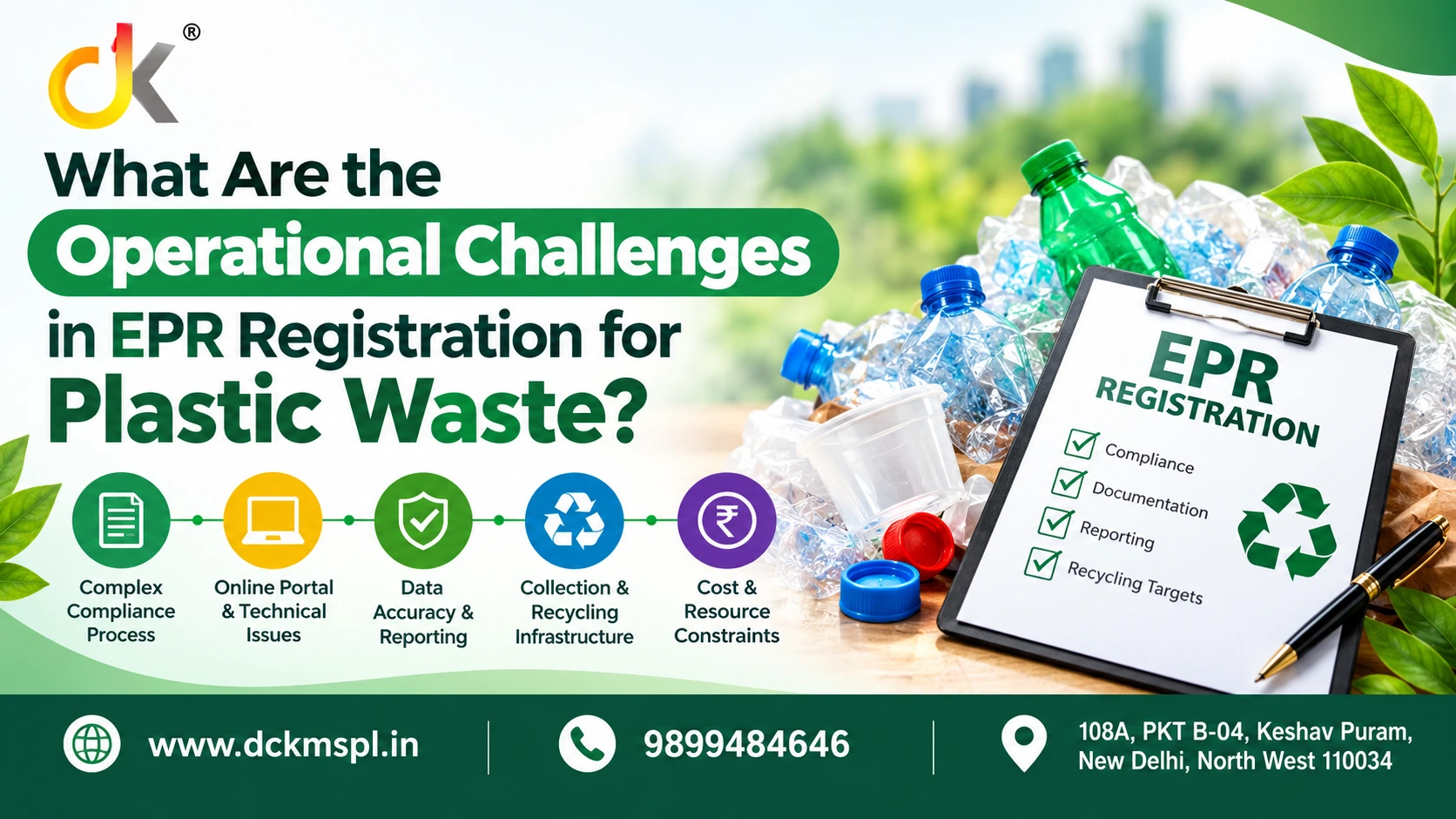
Quick Answer The biggest operational challenges in EPR registration for plastic waste are wrong packaging categorisation, incomplete or mismatched documents, GST data errors, missing recycler agreements, portal and technical issues, unclear targets, weak record keeping, and missed deadlines. Most rejections happen because of data errors, not because the rules are hard. Fixing your documents and data before you apply can save weeks. |
If you sell products in plastic packaging in India, EPR registration is not optional. Yet many businesses get stuck at the very first step. Applications get delayed, sent back with queries, or rejected.
This guide explains why that happens and what to do about it, in simple words.
Key Takeaways
- Every Producer, Importer and Brand Owner (PIBO) using plastic packaging must register on the CPCB EPR portal.
- Most problems come from wrong data, missing papers, and poor coordination between teams.
- The rules changed in 2026, so old checklists may no longer work.
- A pre-application audit is the fastest way to avoid rejection.
What Is EPR Registration for Plastic Waste?
EPR (Extended Producer Responsibility) means the company that puts plastic packaging in the market is responsible for its waste after use. In India, this works under the Plastic Waste Management Rules through the CPCB's online portal.
Who needs to register?
- Producers (who make plastic packaging)
- Importers (who bring in plastic packaging or packaged goods)
- Brand Owners (who sell products under their own brand)
- Plastic Waste Processors (recyclers and others)
2026 Update: What Changed?
Rules moved quickly this year. This is the part most old blogs miss:
- The PWM (Amendment) Rules, 2026 were notified on 31 March 2026. They reshaped certificates, audits and shortfall handling.
- The amendment allows a three-year carry-forward of the 2025-26 shortfall and requires recycled material to conform to IS 14534:2023.
- Plastic packaging information must now be given on-pack through a barcode, QR code, or unique number, including the PIBO's name and CPCB registration number.
- One report says the stand-alone plastic EPR portal was discontinued on 28 June 2026, with company details, targets and certificates moved to a new Common EPR Portal.
|
Important Deadlines and portal steps have changed several times. Always confirm the latest dates on the official CPCB portal before you file. |
9 Operational Challenges in Plastic Waste EPR Registration
1. Wrong Packaging Categorisation
Plastic packaging is divided into categories such as rigid, flexible, multi-layered, and compostable. Many businesses pick the wrong one, or mix categories in one entry.
Why it hurts: Your targets are calculated by category. A wrong choice means wrong targets and wrong reports.
Fix: List every packaging item with material, layers, and weight. Match each item to its category before you log in.
2. Incomplete or Mismatched Documents
Missing certificates, old authorisation letters, or company names that differ across documents cause the most queries.
Why it hurts: Even a small spelling difference can trigger a query and add days or weeks.
Fix: Keep one master folder with incorporation papers, PAN, GST certificate, IEC (for importers), and authorised signatory proof. Check that name and address match everywhere.
3. GST and Sales Data Mismatch
Authorities compare your reported packaging quantity with your GST returns and invoices.
Why it hurts: If the numbers do not match, expect questions and extra scrutiny.
Fix: Let finance, operations and compliance teams agree on one data set. Reconcile it every quarter, not once a year.
4. Not Knowing How Much Plastic You Actually Use
Many companies cannot say how much plastic packaging they put on the market. Data sits with purchase, production, and vendors.
Why it hurts: Without accurate weight data, your targets and returns will be wrong.
Fix: Ask suppliers for packaging weight data. Record it per product (SKU) and per month.
5. No Valid Agreements With Recyclers
You need to work with registered recyclers or processors, and the agreements must be valid for the compliance year.
Why it hurts: An expired or unverified agreement can create problems later.
Fix: Check each recycler's registration on the portal. Keep signed agreements and renewal dates in a tracker.
6. Portal and Technical Problems
Slow uploads, wrong file formats, session timeouts, and platform changes in 2026 have frustrated many applicants.
Why it hurts: Technical errors waste time and can push you past deadlines.
Fix: Prepare files in the correct format and size. Save your data offline. File early, not on the last day.
7. Confusion About Targets and Certificates
Businesses often do not understand how targets work or how many EPR certificates they need to buy. Plastic certificate prices are market driven.
Why it hurts: Waiting till the last moment can cost more and leave you short.
Fix: Calculate your target early. Plan certificate purchases across the year.
8. Poor Record Keeping
Records are scattered across emails, Excel sheets and people's laptops.
Why it hurts: During an audit or inspection you cannot produce proof quickly.
Fix: Use one central system for registrations, invoices, agreements, certificates, and returns.
9. Missing Deadlines and Notices
Deadlines for annual returns have been extended and reopened more than once. Some businesses relax and then miss the final date. Others ignore deficiency notices.
Why it hurts: Late filing and unanswered notices can lead to penalties even if your data is correct.
Fix: Set internal deadlines two to three weeks before the official date. Reply to every notice within the given time.
Read More - What Are the Strategies for Maximizing Benefits of the Advance Authorization Scheme
Quick Comparison: Problem vs. Solution
|
Challenge |
Common Cause |
Quick Fix |
|
Rejection or query |
Wrong category |
Category-wise packaging list |
|
Delay |
Missing documents |
Master document folder |
|
Compliance notice |
GST data mismatch |
Quarterly reconciliation |
|
Wrong targets |
Unknown plastic quantity |
Supplier weight data |
|
Recycler issues |
Expired agreements |
Agreement tracker |
|
Filing failure |
Portal or format errors |
Early filing, correct formats |
|
Audit stress |
Scattered records |
Central record system |
What Happens If You Ignore These Challenges?
- Registration delays or rejection
- Show-cause notices
- Environmental compensation on unmet targets
- Trouble with customers and marketplaces that ask for compliance proof
- Damage to your brand reputation
Your 2026 Pre-Registration Checklist
☐ Confirm you are a Producer, Importer or Brand Owner
☐ List all packaging items with material, weight and category
☐ Match company details across all documents
☐ Reconcile packaging data with GST and sales records
☐ Shortlist registered recyclers and sign agreements
☐ Check on-pack QR or barcode requirements
☐ Prepare files in the correct portal format
☐ Set calendar reminders for return deadlines
☐ Check the latest CPCB portal notices before applying
Should You Do It Yourself or Hire an Expert?
You can handle it yourself if you have one or two simple product lines and clean data. Consider expert help if you have many SKUs, multiple locations, imports, or you have already received a notice. A good consultant checks your data before submission, so problems are fixed before the portal sees them.
Conclusion
Operational challenges in plastic EPR registration are mostly about preparation, not difficulty. Get your packaging data right, keep your documents clean, work with valid recyclers, and file early. With the 2026 rule changes, checking the latest portal notices is now part of good compliance.
Disclaimer: This blog is for general information. Rules and deadlines change often. Please verify with the official CPCB portal or a qualified professional.
Frequently Asked Questions
What is the biggest operational challenge in EPR registration for plastic waste?
The biggest challenge is data accuracy. Wrong packaging categories, mismatched GST figures, and incomplete documents cause most delays and queries on the CPCB portal.
Who must register for plastic EPR in India?
Every Producer, Importer and Brand Owner (PIBO) that places plastic packaging on the Indian market, and every plastic waste processor, must register on the CPCB EPR portal.
Why is my plastic EPR registration getting delayed or rejected?
Common reasons are missing documents, company name mismatches, wrong packaging category, unclear packaging data, expired recycler agreements, and portal upload errors.
How long does plastic EPR registration take?
It depends on how accurate your application is and how busy the portal is. A clean and complete application moves faster than one that needs corrections. Check the CPCB portal for current timelines.
Which documents are needed for plastic EPR registration?
Usually you need company incorporation proof, PAN, GST certificate, authorised signatory proof, IEC for importers, packaging details, and recycler agreements. Requirements can change, so verify on the portal.
Can I sell my products without EPR registration?
Obligated entities are not allowed to operate without the required registration. Doing so can lead to notices, penalties, and problems with marketplaces and customers.
What is an EPR certificate for plastic waste?
It is proof that a registered recycler or processor has handled a specific quantity of plastic waste. Businesses use these certificates to show that they met their EPR targets.
What happens if I do not meet my EPR targets?
You may face environmental compensation on the shortfall, show-cause notices, and stricter checks. The 2026 amendment allows some carry-forward of shortfall, so check the latest rules.
Did the plastic EPR rules or portal change in 2026?
Yes. The PWM (Amendment) Rules, 2026 were notified on 31 March 2026, and reports say plastic EPR is moving to a combined Common EPR Portal. Always check the latest CPCB notices before filing.
Should I do EPR registration myself or hire an expert?
You can do it yourself if you have few products and clean data. Hire an expert if you have many SKUs, multiple locations, imports, or have already received a notice.
How [DCK] Can Help
We handle EPR registration for plastic waste from start to finish:
- Eligibility check
- Packaging categorisation
- Document review
- CPCB portal filing
- Recycler and certificate support
- Annual return filing
- Notice reply support
|
Get a Free EPR Readiness Check Call or WhatsApp [9899484646] today, or visit [https://dckmspl.in/]. Our team will review your documents and tell you what to fix before you apply. |